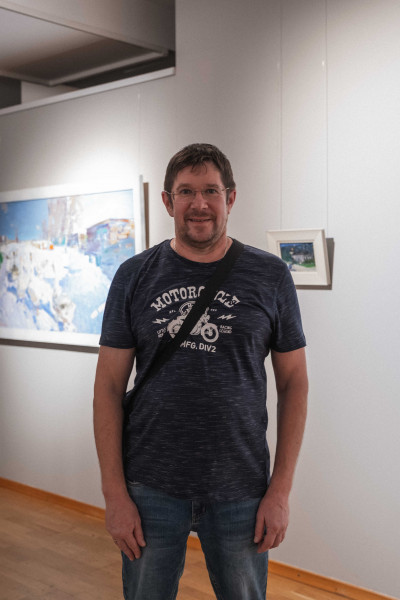
Petr Bezrukov was born in Moscow on May 28, 1974. He graduated from the Moscow Secondary Art School named after Tomsky at the Surikov Institute in 1992 and was a scholarship recipient of the Lenin Children’s Fund.
In 1998, he completed his studies at the Surikov Moscow State Academic Art Institute (workshop of Professor V. N. Zabelin). He participated in All-Union exhibitions of young artists and, since 1998, has been a member of the Moscow Union of Artists.
Bezrukov regularly takes part in group exhibitions at the Central House of Artists, as well as in national academic and international plein air projects. He has held solo exhibitions in Moscow, Sarov, Podolsk, Troitsk, The Hague, London, Paris, and New York. He also undertakes annual creative residencies in Paris.
From 1999 to 2000, he taught painting at the Moscow Academic Art School “In Memory of 1905.” In 2004, he participated in the painting of the Church of the Kazan Icon of the Mother of God at Kazansky Railway Station in Moscow. He collaborates with numerous galleries across Russia. His works are held in museum collections, including the Abkhazian State Art Museum (Sukhumi), the Kolomna Art Gallery, and the Bakhchisarai Historical, Cultural, and Archaeological Museum, as well as in private collections.
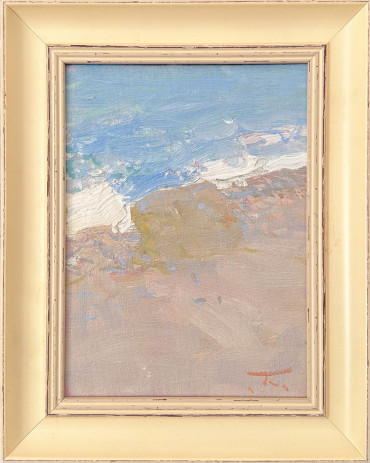
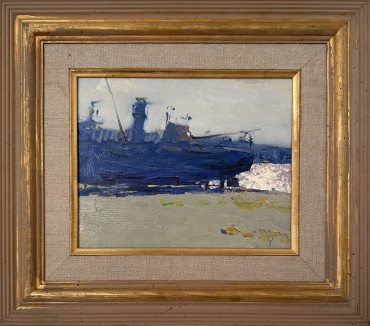
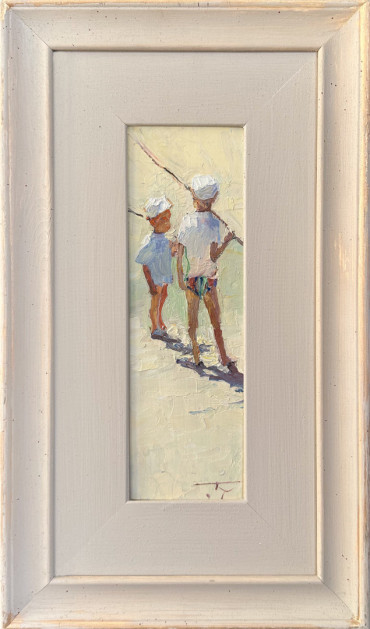
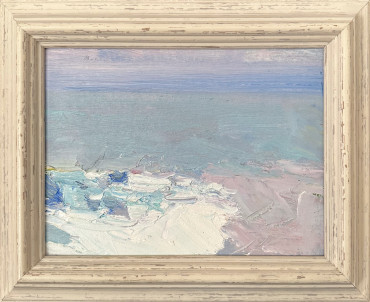
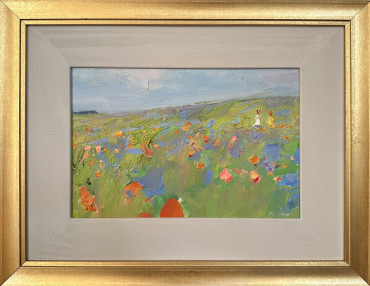
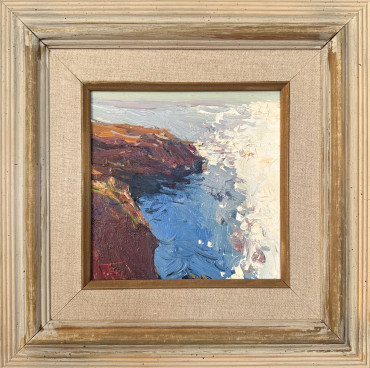
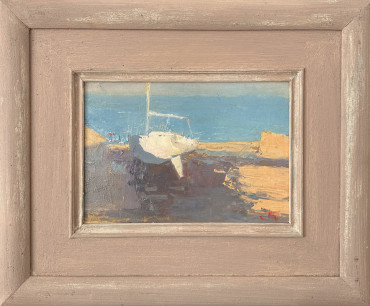
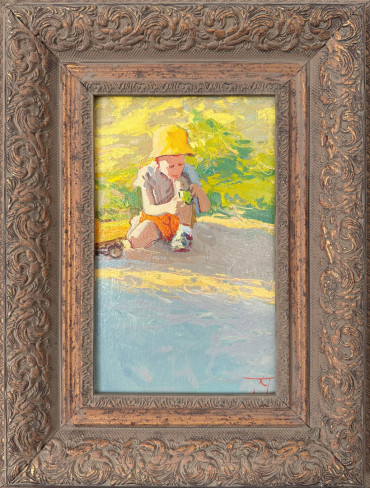
Bezrukov’s painting is driven by a desire to capture the elusive sensation of light — an experience akin to quiet calm and gentle joy, like the feeling of warm, dry sand slipping through one’s fingers. It evokes that delicate threshold of perception: standing ankle-deep at the edge of the sea, sensing the rhythm of water — warm, cool, warm, cool — and the soft, grainy movement of pebbles rolling beneath bare feet.
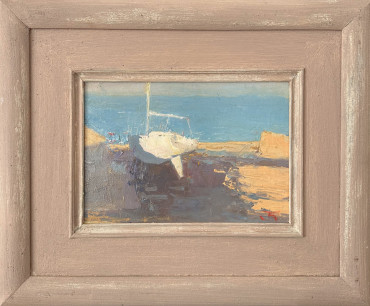
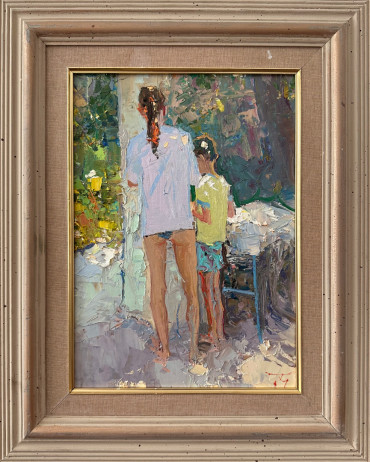
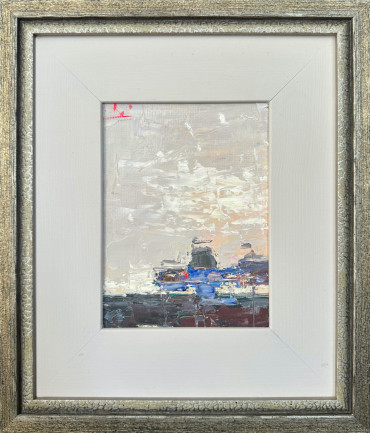
The artist tempers the intensity of shadow, reducing unnecessary contrasts. In doing so, depth gives way to a chromatic plane — a space where recognizable forms and familiar places are not rendered literally, but appear slightly flattened, inviting the viewer to dissolve into subtle tonal variations.
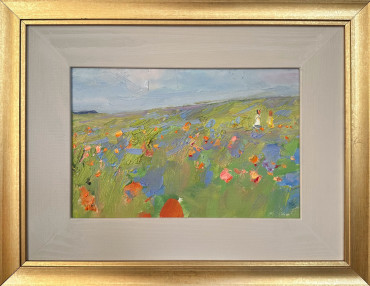
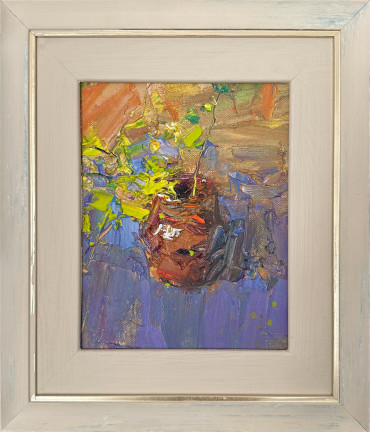
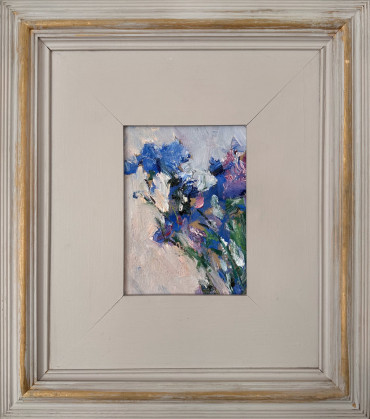
In his floral still lifes, objects seem untouchable: they exist both on the surface and as if about to detach from it. This is how the plastic language of Russian Impressionism continues to evolve within a contemporary context.
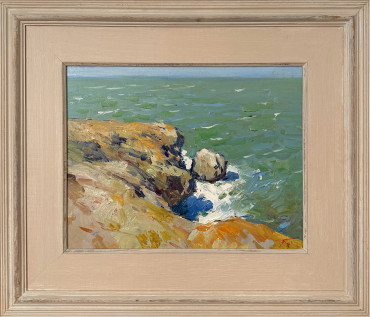
His numerous travels and plein air sessions form a continuous stream of painterly impressions. Bezrukov creates a sequence of atmospheric studies — not as documentary observations, but as lived sensations. Blurred contours, trembling brushwork, and the density of palette knife application all suggest that, for the artist, the very substance of painting matters more than narrative.
Whether depicting a winter near Moscow, the streets of Paris, or the luminous landscapes of Crimea, Bezrukov does not present reality as it is, but as a realm of feeling, memory, and dream — a place one longs to inhabit.