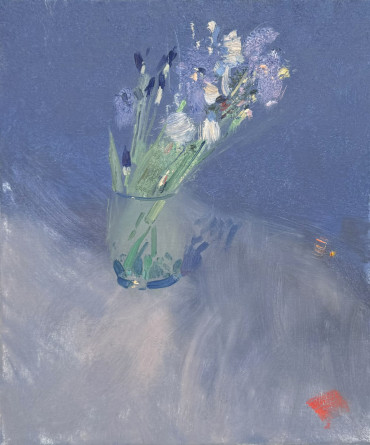
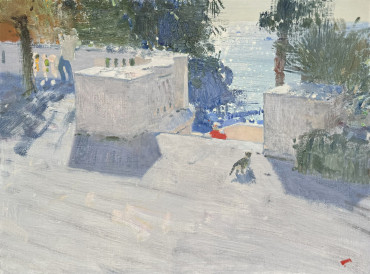
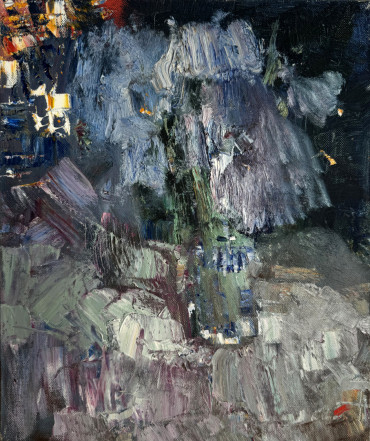
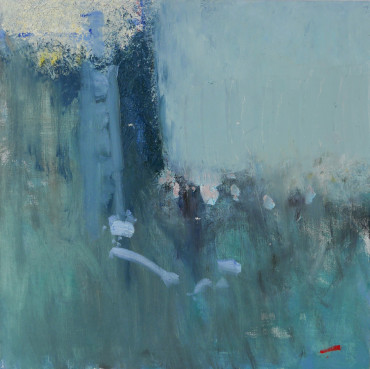
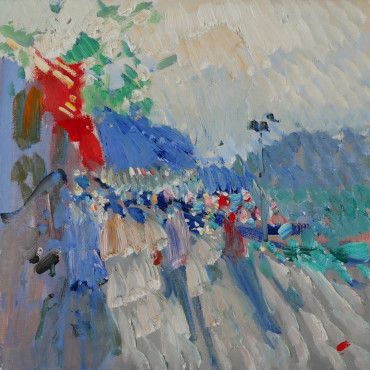
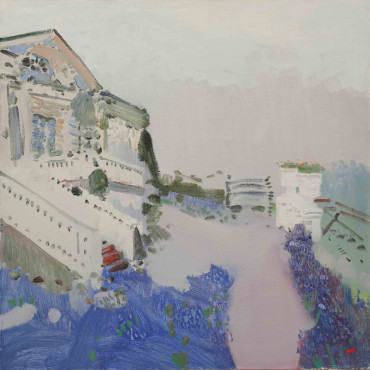
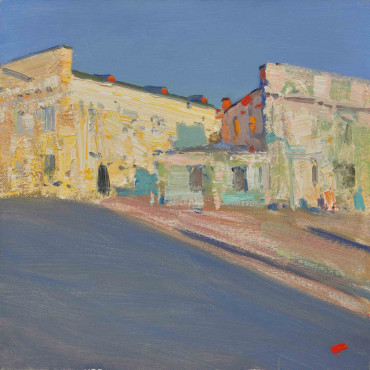
What can be said about an artist with the army nickname “Baton”? That apart from holding a brush, he is only good at building dreamy plans about walking away from future projects. And that back in Soviet times, he managed to get a free education at the Moscow Secondary Art School and the Surikov Institute. He studied with everyone — something he has now stopped doing. When is there time to create? If you spend all your time hanging around exhibitions of the greats, you’ll never have time for your own work.
Improvising endlessly on the piano without recording anything, you begin to understand that you don’t have to be a professional in everything — or even in music. Why? Because you cannot earn a living from it, and that frees you from any imposed order of the world. You are free, and music becomes like a prayer, without repetition. Like breathing, like watching the sun for free, being amazed each time by clouds and the invisible wind.
But people often forget this and paint with intoxicating pleasure, not allowing their thoughts to wander freely. After long breaks from painting, I sometimes put down a small patch of paint — no bigger than a palm — and the world restores itself inside me, as if I had just unloaded a freight car.
The present moment exists at the tip of the brush where it meets the canvas. Before that contact, sketch-like thoughts are imperfect. Decisions change only in the present moment. If a sketch is reproduced exactly in a painting, it signals the fading of creative search.
The fewer colors on the palette, the more painterly the result. Large areas of mixed paint on the palette dull the explosive energy of color. The more you mix, the less energy remains. Mix your colors directly on the canvas! There’s even a thought to squeeze paint onto a ruler and work, like Surikov, with a tiny palette.
Plein air teaches a portrait painter to see the subject without attachment. Any attachment results in a highlight on the nose, in excess, and in lifeless space within the work. Having a studio can kill the artist within. What is needed is necessity — hunger, family, children, loans, and a sense of no way out. That is the true open field for creativity.